 The Woodlands Tree Service
Tree Roots Damaging Foundation in The Woodlands, TX: Signs and Fixes
A crack in your slab, a driveway slab that has lifted an inch, a sidewalk buckled by a root. In The Woodlands, the cause is often the same: a big tree too close to the house, growing roots under the concrete. Here is how to tell if roots are the problem, what fixes it, and when the tree has to come down.
How Tree Roots Damage a Foundation
Roots do not punch through concrete. They do something slower. They drink the moisture out of the clay soil under your slab, and the clay shrinks. Then rain comes back, the clay swells, and the slab moves. That cycle cracks foundations. The Woodlands sits on clay that shrinks and swells more than most Texas soil, so the movement here is worse than in sandy ground.
Roots also lift. A root growing under a driveway or sidewalk pushes the slab up as it thickens year after year. One lifted slab corner is a trip hazard and a sign the root is still growing. The same root system can reach a sewer line. Roots chase water, and a tiny crack in an old clay or cast iron line is an open door. Slow drains and repeated backups near a big tree are worth checking.
The worst offenders in The Woodlands are the trees we love most. Loblolly pines grow 80 to 100 feet tall with wide root plates. Live oaks spread roots as wide as their canopy. A tree that looks a safe distance away often is not, because roots spread one and a half to two times the width of the canopy.
Signs Roots Are Damaging Your Home
Walk the house and look for these. Stair-step cracks in brick or block walls. Doors and windows that stick in dry weather and free up after rain. A crack across the garage floor that keeps growing. Gaps where the wall meets the ceiling. Outside, look for lifted driveway slabs, a sidewalk pushed up at a joint, and roots visible at the surface near the foundation.
Inside, watch the plumbing. A toilet that gurgles, a drain that keeps clogging in the same spot, or a sewer backup after heavy rain can all point to roots in the line. A camera inspection by a plumber confirms it. If roots are in the line, the tree feeding them usually has to go, because cutting the roots out of the pipe only buys a year or two.
One sign on its own may mean nothing. Two or three together, with a big tree within 20 feet of the house, is worth a free inspection before the next dry summer makes it worse.
Fixes: Root Barrier, Trimming, or Removal
Not every root problem means losing the tree. A root barrier is a plastic or metal panel buried between the tree and the house. It deflects roots downward and away from the slab. It works when the tree is healthy, the damage is early, and the roots are coming from one side. A barrier costs less than a removal and keeps the shade.
Root pruning is a second option, but it is risky on a big tree. Cutting a large root close to the trunk can destabilize the tree or kill it slowly. We only prune roots when an arborist has checked the tree first. Never cut a root yourself near a tree you want to keep. A tree that loses its anchor roots can fall in the next storm, and then you need emergency tree removal on top of the foundation repair.
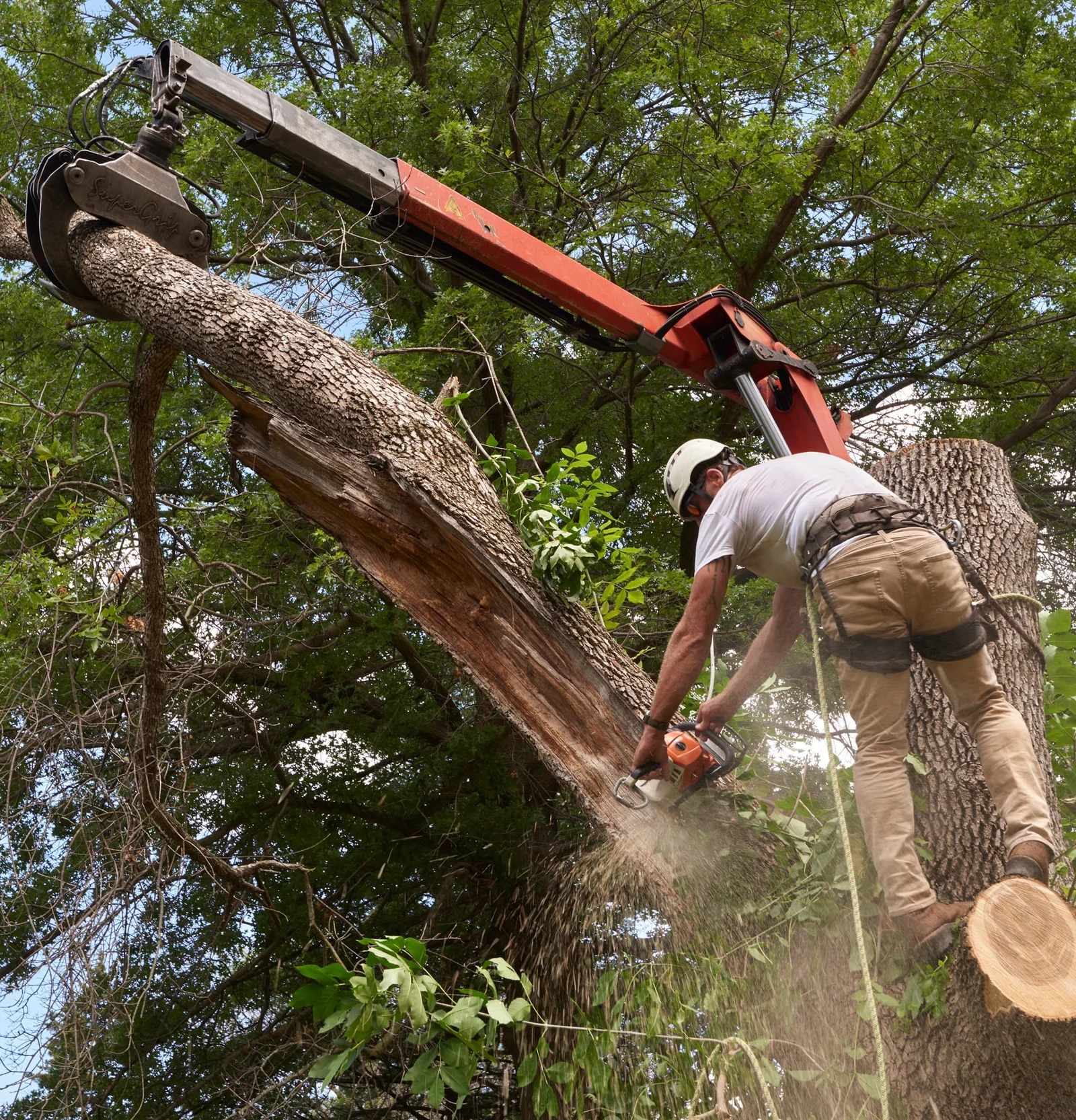
Removal is the right call when the slab is already cracked, the tree is large and close, or roots have reached the sewer line. A tree tight against a house comes down in sections, rigged by rope, so nothing touches the roof. After the trunk is down, stump grinding clears the stump and the surface roots, so the ground can settle and the slab can be repaired properly. If the tree is dead or dying as well, our guide to when to remove a tree covers the other warning signs.
How Much Does It Cost
Removing a tree that is damaging a foundation usually costs more than a tree in an open yard, because the crew works tight against the house and rigs every piece down.
Our full breakdown is in tree removal cost in The Woodlands. Every job gets a free on-site quote before any work starts, so you know the exact price first. Compare that with foundation repair, which often runs into the thousands, and removing the tree first is usually the cheaper step.
Seeing cracks or lifted concrete near a big tree? Call (346) 248-8953 for a free inspection.
What to Do Next
Do not ignore a crack that is growing. Photograph the cracks and the lifted slabs, and note when they change. Keep water away from the foundation in dry spells, since dry clay shrinks hardest. And do not plant a new tree in the same spot. If you want shade near the house, pick a small species and plant it at least 20 feet out.
Call (346) 248-8953 or visit our contact page. We walk the property, check which tree is feeding the roots, and tell you honestly whether a barrier will hold or the tree has to come down.
Frequently Asked Questions
Can tree roots really crack a house foundation?
Yes. Roots do not punch through concrete, but they dry out the clay soil under a slab and lift it as they grow. The soil movement cracks the slab. In The Woodlands, the clay soil shrinks and swells with moisture, so a big tree close to the house makes the movement worse.
How close is too close for a tree to a house?
A good rule is that a tree should stand at least as far from the house as its mature height. A 60 foot pine 15 feet from the slab is a risk. Roots usually spread one and a half to two times the width of the canopy, so a tree that looks far enough away often is not.
Should I remove the tree or install a root barrier?
A root barrier works when the tree is healthy, the damage is early, and the roots are on one side. Removal is the right call when the slab is already cracked, the tree is large and close, or roots have reached the sewer line. A free inspection tells you which one fits your yard.
How much does it cost to remove a tree damaging a foundation?
Trees tight against a house cost more because the crew rigs every piece down by rope.