 The Woodlands Tree Service
Pine Beetles in The Woodlands: Signs Your Pine Is Already Dead
The Woodlands is a pine forest with houses in it. Loblolly pines tower over almost every street. That is exactly what southern pine beetles want. These small beetles bore under the bark, cut off the tree water flow, and kill a tall pine in weeks. By the time most owners call us, the tree is already dead. The real question is whether the beetles have moved to the next pine yet.
This guide gives you the signs we check on every inspection. Learn them and you can spot an attack while there is still time to protect the rest of your trees.
How a Beetle Attack Works
Adult beetles land on a stressed pine and bore through the bark. They carve tunnels under the bark and lay eggs. The tunnels ring the trunk. Water stops moving up. The beetles also carry a fungus that stains the wood blue and blocks what flow is left. A healthy pine sometimes fights off a small attack by flooding the holes with pitch. A drought-stressed or crowded pine usually cannot.
Heat speeds everything up. In a Texas summer a beetle generation can turn over in a few weeks. One infested pine can seed a whole street.
The Five Signs We Check
1. Pitch tubes on the trunk
Look for small popcorn-shaped clumps of sap on the bark. They range from white to reddish brown. Each one marks a beetle entry hole. A few tubes low on the trunk mean the attack has started. Tubes all the way up mean it is well along.
2. Boring dust in the bark cracks
Fine sawdust collects in bark crevices and at the base of the tree. Fresh dust is light colored. It means beetles are actively tunneling right now.
3. Crown fade from the top down
Needles turn dull green, then yellow, then rust red. On loblolly pines the fade starts at the top. Once the whole crown is red, the tree is dead. It will not green up again.
4. Bark coming loose
Peel a small piece of bark on a suspect tree. Under a heavy attack you find winding tunnels packed with sawdust. Woodpeckers know this too. Heavy woodpecker damage on one pine is a warning sign by itself.
5. Needles dropping out of season
Pines shed some needles every fall. A pine dropping needles in spring or early summer, with a fading crown, is telling you something else is wrong.
The Scratch Test
Still not sure? Scratch the green tissue under the bark on a low branch. Living tissue is pale and moist. Dead tissue is brown and dry. Check two or three branches. If all of them are dry and the crown is fading, the tree is gone. If the crown is still fully green and you only see a couple of pitch tubes, call us fast. That tree may still be saved by removing the pressure around it, but the honest odds are low once beetles are established.
See pitch tubes or a fading crown? Do not wait for the next stage. Call (346) 248-8953 for a free inspection.
Why Speed Matters
A dead pine is a hazard on a timer. Dead loblolly wood turns brittle fast in our humidity. Limbs drop without warning. The trunk itself can snap in a storm it would have survived alive. If that pine leans over your roof or your neighbor fence, waiting is a gamble.
The second reason is spread. Beetles leave a finished tree and fly to the nearest stressed pine. In villages like Grogan's Mill, where old pines stand close together, we have watched one ignored tree cost a street several more. Our pine removal guide explains how we take big pines down safely once they are dead.
What Removal Looks Like
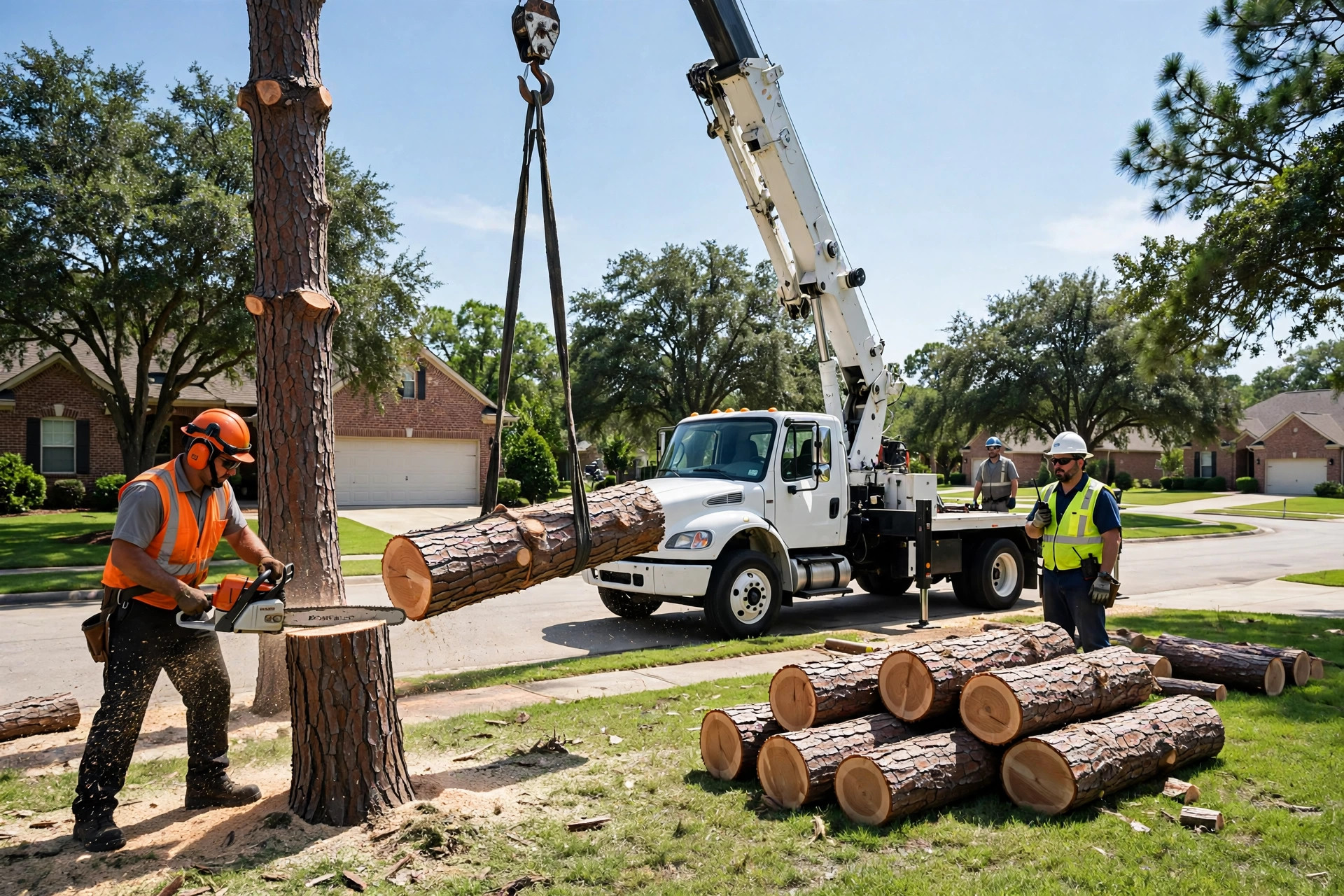
Beetle pines come out under the dead tree exception in the Township Standards. No approval application is needed. We photograph the tree first for your records. Then we remove it, usually by climbing and sectioning or with a crane for the brittle ones. The wood leaves your lot the same day. Stacking infested pine as firewood keeps the beetles breeding beside your healthy trees. Haul it. The stump gets ground the same visit so nothing breeds in it either. See our tree removal service page for the full process.
Protecting the Pines That Remain
- Water during drought. A deep soak every couple of weeks in a dry summer keeps pitch flowing and defenses up.
- Thin crowded pines. Trees fighting for light and water are the first targets. Removing the weakest pine can save the strong ones.
- Avoid trunk wounds. Mower and string trimmer damage opens the door. Keep mulch rings around trunks instead of grass.
- Watch the neighbors trees too. Beetles do not respect lot lines. If the pine next door fades, say something early. It protects your yard.
Frequently Asked Questions
Can a pine tree survive a beetle attack?
Rarely, once the crown fades. A strong tree sometimes pitches out a small early attack. Once pitch tubes ring the trunk and needles turn rust red, the beetles have cut off the water supply. That tree will not recover.
How fast do pine beetles spread to other trees?
Fast in warm weather. A generation can finish in a few weeks. Adults fly to nearby stressed pines, often on the same street. Removing an infested tree quickly is the main way to protect the pines around it.
Do I need Township approval to remove a beetle-killed pine?
No. Dead and hazardous trees are pre-approved under the Township Standards. Take photos of the dead crown and the pitch tubes before removal. They document why the tree qualified. Our rules guide explains the full system.
Should I keep beetle pine wood for firewood?
No. Stacked infested wood keeps breeding beetles next to your live pines. Have the wood hauled off the lot the day the tree comes down. Clean wood from a healthy pine is fine to keep.
How much does it cost to remove a dead pine?
Most single pines fall in the medium band of our cost guide. Dead wood is brittle, so pines over houses can cost more. The estimate is free. Call (346) 248-8953.
Get a Straight Answer on Your Pine
One visit tells you if the tree can be saved or has to go. We check the crown, the bark, and the dust. Then we give you a firm price if removal is the answer. Call (346) 248-8953 today.